
 Image 1 of 2
Image 2 of 2
Image 1 of 2
Image 2 of 2
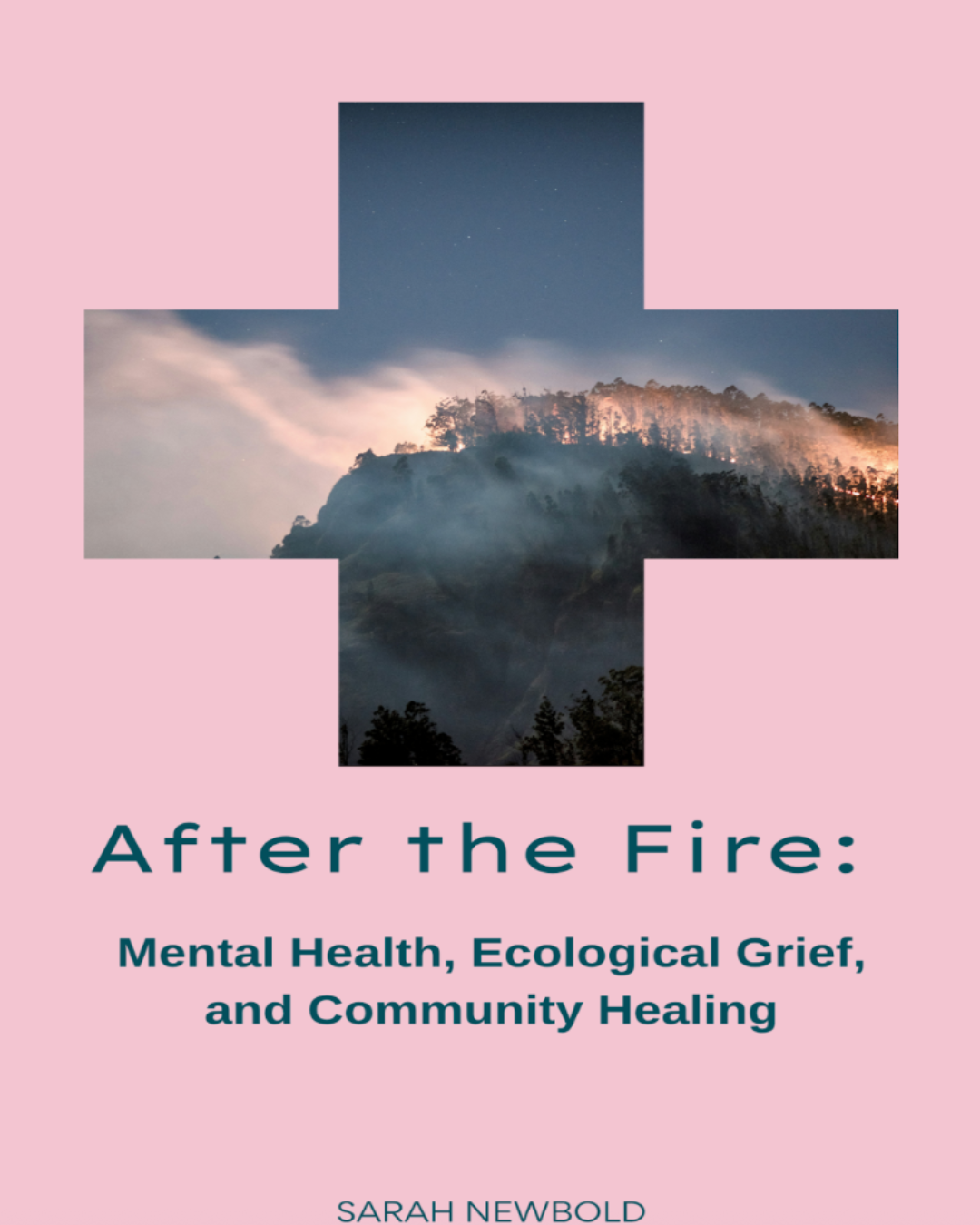
After the Fire: Mental Health, Ecological Grief, and Community Healing is a comprehensive, free public resource designed to support both communities and practitioners navigating recovery after bushfires and natural disasters in Australia.
Written by Sarah Newbold, this guide approaches disaster recovery through a progressive, collectivist, and ecological lens, recognising that mental health cannot be separated from the health of communities and the land itself. The book moves beyond traditional clinical frameworks to centre community leadership, cultural healing, and environmental recovery as essential components of psychological wellbeing.
Key features include:
Phased recovery guidance covering acute response (first hours to two weeks), early recovery (two to twelve weeks), and long-term healing (three months to five years)
Evidence-based practices including Psychological First Aid, trauma-focused therapies, and skills-based interventions, presented alongside collective healing approaches
Centred focus on priority populations with dedicated sections on supporting children, First Nations communities, culturally and linguistically diverse groups, first responders, and people with disabilities
Decolonial framework that positions Indigenous knowledge and Aboriginal Community Controlled Organisations as leaders in recovery, particularly around cultural burning, healing on Country, and connection to land
Intersectional analysis recognising how disaster impacts differ across gender, culture, class, disability, sexuality, and other identities
Ecological grief and environmental recovery addressing the profound loss people feel for damaged landscapes, wildlife, and cultural sites
Organisational sustainability with practical guidance on preventing burnout, supporting staff wellbeing, and maintaining services long-term
Systems change advocacy calling for multi-year funding commitments, integrated coordination, and policy reforms that embed equity and justice into disaster response
Preparedness strategies for building community resilience before the next fire season, including psychological readiness and culturally-led planning
The book emphasises that recovery happens through connection, care, and collective action, not in isolation. It challenges the notion that bushfire recovery is primarily about rebuilding physical structures, arguing instead that healing requires restoring relationships between people, communities, Country, and the living world.
Written with respect for all who have faced fire, this resource positions itself as a "living document" open to community feedback and adaptation. It serves both as a practical toolkit for practitioners and a source of validation and guidance for survivors seeking to understand their experiences and find pathways forward.
After the Fire: Mental Health, Ecological Grief, and Community Healing is a comprehensive, free public resource designed to support both communities and practitioners navigating recovery after bushfires and natural disasters in Australia.
Written by Sarah Newbold, this guide approaches disaster recovery through a progressive, collectivist, and ecological lens, recognising that mental health cannot be separated from the health of communities and the land itself. The book moves beyond traditional clinical frameworks to centre community leadership, cultural healing, and environmental recovery as essential components of psychological wellbeing.
Key features include:
Phased recovery guidance covering acute response (first hours to two weeks), early recovery (two to twelve weeks), and long-term healing (three months to five years)
Evidence-based practices including Psychological First Aid, trauma-focused therapies, and skills-based interventions, presented alongside collective healing approaches
Centred focus on priority populations with dedicated sections on supporting children, First Nations communities, culturally and linguistically diverse groups, first responders, and people with disabilities
Decolonial framework that positions Indigenous knowledge and Aboriginal Community Controlled Organisations as leaders in recovery, particularly around cultural burning, healing on Country, and connection to land
Intersectional analysis recognising how disaster impacts differ across gender, culture, class, disability, sexuality, and other identities
Ecological grief and environmental recovery addressing the profound loss people feel for damaged landscapes, wildlife, and cultural sites
Organisational sustainability with practical guidance on preventing burnout, supporting staff wellbeing, and maintaining services long-term
Systems change advocacy calling for multi-year funding commitments, integrated coordination, and policy reforms that embed equity and justice into disaster response
Preparedness strategies for building community resilience before the next fire season, including psychological readiness and culturally-led planning
The book emphasises that recovery happens through connection, care, and collective action, not in isolation. It challenges the notion that bushfire recovery is primarily about rebuilding physical structures, arguing instead that healing requires restoring relationships between people, communities, Country, and the living world.
Written with respect for all who have faced fire, this resource positions itself as a "living document" open to community feedback and adaptation. It serves both as a practical toolkit for practitioners and a source of validation and guidance for survivors seeking to understand their experiences and find pathways forward.