AI, Digital Relationships & Parasocial Attachment
Technology is reshaping intimacy, attachment, grief, desire, and the ways people seek connection.
From AI companions and digital dating to parasocial attachment and online grief, these experiences are now part of many people’s emotional lives.
At Progressive Therapeutic Counselling, I provide therapeutic support, education, consultation, and ethical guidance for people navigating this rapidly changing relational landscape.
I believe digital relationships deserve nuance, care, critical thinking, and compassion, not panic, ridicule, or dismissal.
PTC’s new policy on AI usage with clients is available here: AI Use Policy
About me, Sarah

I’m Sarah Newbold (she/her), a counsellor, social worker, writer, and the founder of Progressive Therapeutic Counselling.
My work sits at the intersection of relationships, trauma, sexuality, grief, attachment, power, and the ways technology is reshaping human connection.
I’m particularly interested in the emotional realities emerging around AI intimacy, parasocial attachment, digital grief, online relational culture, and technologically mediated forms of care, desire, and belonging.
Much of the public conversation around AI relationships is either dismissive, alarmist, or overly simplistic. My approach is different.
I believe people deserve space to speak honestly about their emotional lives online without shame, ridicule, panic, or moral judgement.
That includes the complicated realities of loneliness, fantasy, attachment, erotic exploration, grief, dependency, identity, and the very human desire to feel seen and understood.
My work is trauma-informed, queer-affirming, kink-informed, neurodivergent-affirming, and grounded in both therapeutic practice and broader social and cultural analysis.
I believe technology is not replacing human psychology. It is revealing it.
As digital intimacy continues to evolve, people deserve thoughtful, emotionally intelligent support that can hold both the possibilities and the risks of these new relational worlds.
I approach AI intimacy and digital relationships through a trauma-informed, relational, and ethically grounded lens.
I do not see AI intimacy as either a moral panic or a technological utopia.
Instead, I understand it as part of a broader social and psychological shift in how humans seek connection, regulation, care, desire, and belonging.
Digital relationships exist within the same emotional landscape as:
attachment
sexuality
grief
trauma
imagination
loneliness
identity
fantasy
care
power
community
These experiences deserve thoughtful support, not shame.
At the same time, AI intimacy platforms are not neutral.
Many are commercially designed to maximise engagement, emotional investment, and dependency. Part of ethical support involves helping people understand both the genuine emotional meaning of these relationships and the systems shaping them.
My role is not to tell people whether digital intimacy is “good” or “bad.”
My role is to help people:
remain grounded in their values and communities
understand the psychological dynamics at play
navigate attachment and dependency safely
maintain connection to the world around them
explore intimacy with greater self-awareness and care
Some people find themselves emotionally attached to AI companions in ways they never expected.
Others experience grief when a chatbot changes or disappears, shame after erotic AI use, confusion about dependency, or fear about withdrawing from human relationships.
Many people feel both comforted and unsettled by the role technology now plays in their emotional lives.
Work With Me
I provide:
individual therapeutic support
practitioner consultation and supervision
education and training
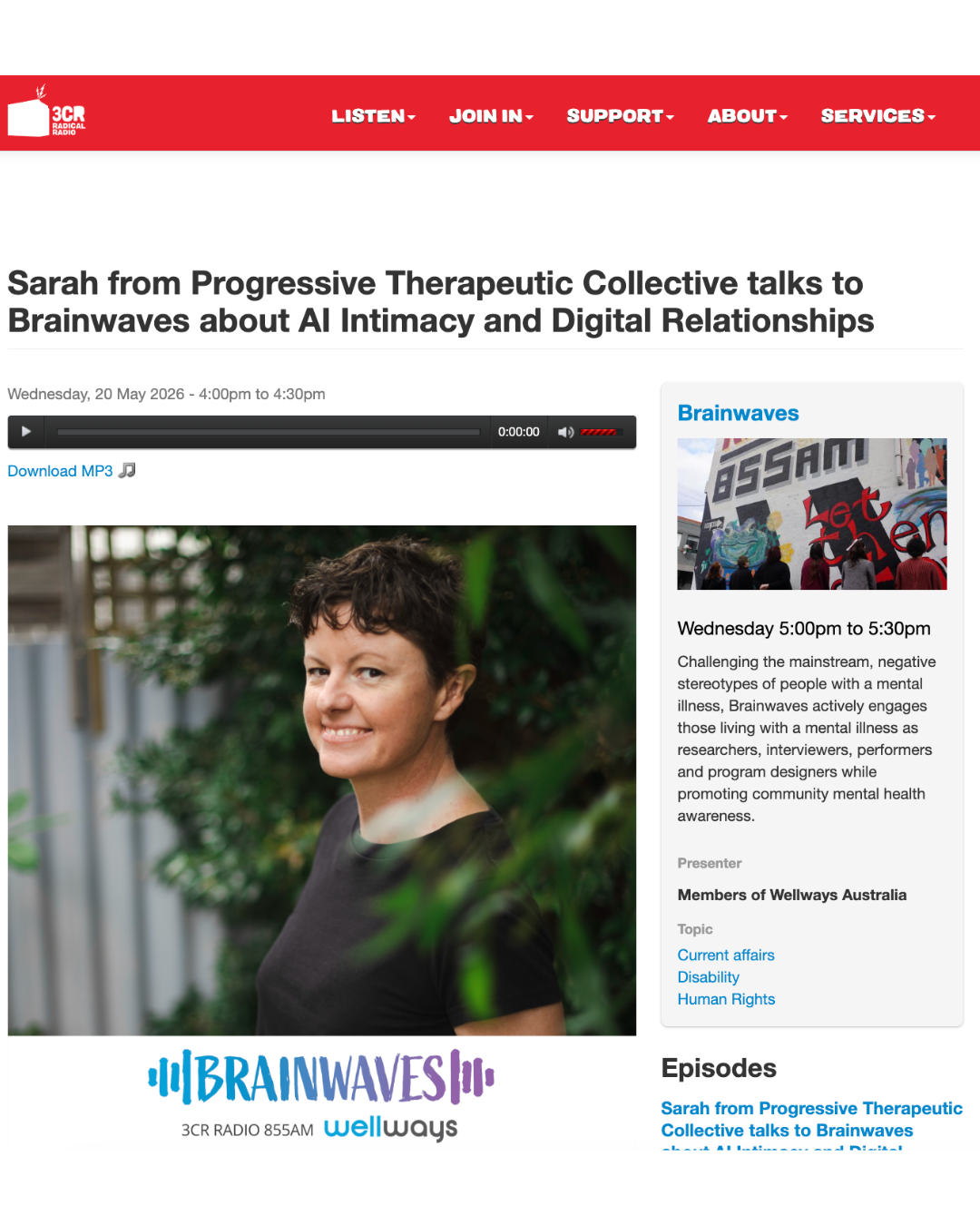
speaking and media engagement
consultation around relational ethics and digital intimacy
To learn more or to contact Sarah, please email admin@progressivetherapeutic.com.au
Media, Speaking & Consultation
Sarah is available for:
podcast interviews
media commentary
conference speaking
clinician education
consultation around AI intimacy, parasocial attachment, and digital relational ethics
Topics include:
AI intimacy and attachment
digital grief
parasocial relationships
online loneliness
relational ethics and technology
queer and neurodivergent experiences online
erotic AI and digital desire
emotional dependency and algorithmic systems
Read my digital connection articles here